
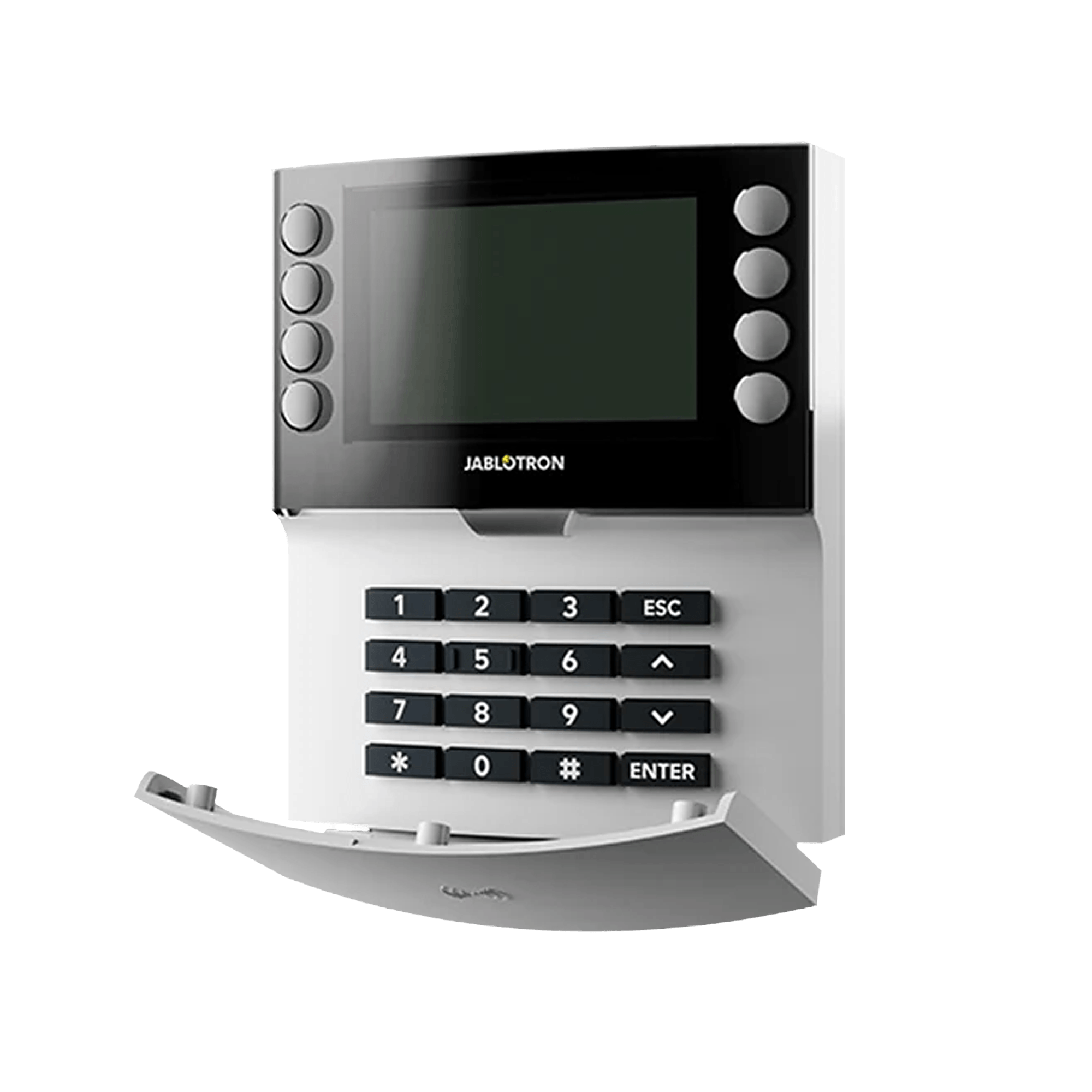
Sample image for this product group

Alarm Systems

Alarm systems detect dangers early and help protect people and assets. They are used in industry and commerce, public buildings, and private homes.

Sensors and detectors detect potential hazards (e.g., smoke development, gas leaks, movement, glass breakage, temperature changes), which are then processed in a central unit, triggering an alarm visually, acoustically, or by transmitting a signal directly to security services or control centers. Additionally, you can integrate further functions, such as video surveillance.

Find the right solution for your building with us!

Components: Central unit, detectors (smoke, heat, motion, glass break, gas, and water detectors), control elements, signaling devices
Communication: Wired or radio-based, optionally with IP connection
Integration: Interfaces to fire and extinguishing systems, access control, video surveillance
Scalability: From small units to complex large-scale systems

We would be happy to advise you and work with you to find the right alarm system for your building and purpose. We professionally install all elements, regularly maintain and inspect them, and repair them if necessary. You will also receive detailed instructions and training on how to use the system.

Alarm Systems: Manufacturers & Supplier(s)

Discover more ...

Two red fire extinguishers of different sizes with black hoses and nozzles stand upright against a white background. The labels on both are in German. – Brandschutztechnik Eller

Carbon Dioxide Fire Extinguishers

Carbon dioxide fire extinguishers are primarily suitable for Class B fires – i.e., flammable liquids and substances that become liquid when heated. Typical areas of use include hazardous materials storage facilities, laboratories, and the aviation and maritime sectors.

The extinguishing agent is carbon dioxide (CO₂), stored under high pressure and directed straight at the seat of the fire. The extinguishing effect is mainly achieved by displacing oxygen – the fire is smothered. The key advantage: CO₂ evaporates without leaving any residue, so there is no damage caused by powder or foam residue – or water – during fire suppression.

Carbon dioxide extinguishers are also well suited for fires in electrical installations, such as data centers and server stations. If a minimum distance of 1 m is maintained, fires in installations up to 1,000 volts can be extinguished with them (see fire-fighting guidelines DIN VDE 0132).
Red Gloria fire extinguisher with instructions in German and English on the label. – Brandschutztechnik Eller

Dry Powder Fire Extinguishers

Dry powder fire extinguishers suit fires in Classes A, B, and C, solid, liquid, and gaseous substances. Their versatility makes them ideal for locations where different combustible materials are stored together, such as industrial facilities, tank farms, multi-story and underground car parks, parking garages, production halls, warehouses, or heating systems.

For larger fire scenarios, wheeled extinguishers are suitable: Large wheels (30 cm) and a tip-resistant design make them easy to transport to the scene, even across level changes. The extinguishers feature a long, high-pressure hose and a swiveling, parkable discharge gun, allowing one person to operate them flexibly. All wheeled extinguishers in our range are tested to DIN EN 1866.

Portable dry powder fire extinguishers are suitable for smaller fires in commercial and private settings. However, as the powder extinguishing agent leaves residue, we do not recommend using it indoors; it is primarily intended for outdoor use.
A red door with a vertical window pane and a silver door handle, reminiscent of the robust fire protection gates for commercial buildings in the Upper Palatinate industry, stands out. Above the door handle is a white "Fire Exit" sign with a running figure and a downward-pointing arrow. The door is shown against a plain, light background. – Brandschutztechnik Eller

Fire Doors and Gates

Fire doors and gates serve to compartmentalize burning areas in buildings. They reduce the spread of fire and smoke, keeping escape and rescue routes passable.

They use special, fire-retardant building materials and, depending on the model, can withstand fire for 30, 60, or 90 minutes. Smoke seals in the door also limit the spread of smoke and other toxic gases. In a fire, the door closes automatically. Furthermore, fire doors/gates can also be automatically controlled and closed via door closers or alarm systems.
Alarm Systems

Enquiry Assistant

How does it work? Simply select products and specify the desired quantity. Then enter your contact details and submit straight away. We will review your enquiry and get back to you promptly.

Your contact details: